How to Treat and Prevent the Most Common Climbing Injuries

Climbing is an ass kicking, total body workout that often leaves me breathless.  As with any sport, there must be an element of self-care we implement so that we can sustain our passion for the climb without burning out our bodies.  In rock climbing, the vast majority of injuries result from overuse, most often occurring in the fingers, elbows, and shoulders.

Overuse symptoms are no fun and can result in pain and permanent damage.  My own experience of nearly a decade of climbing and neglecting to take care of my fingers and joints in the early years has caused some unforeseen headaches and challenges.

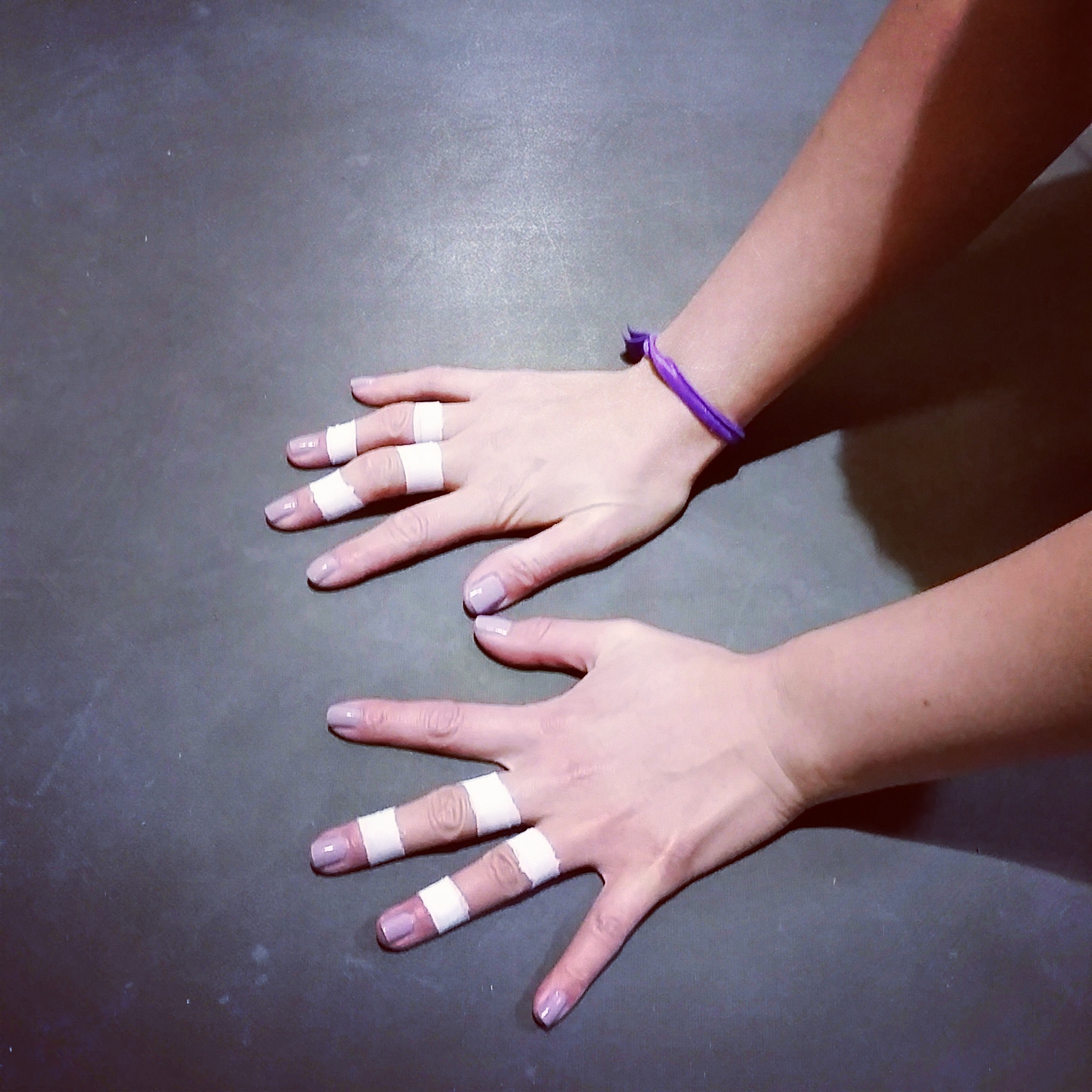
Boutonniere deformities on middle and ring finger across both hands due to A2 pulley injuries

Boutonniere deformities on right middle and ring fingers due to A2 pulley injuries

The three finger injuries that climbers frequently experience are an A2 pulley strain or rupture, a flexor tendon tear, or a collateral ligament strain.

Continue reading

How to Build Power and Endurance for Climbing

I’ve often viewed climbing as a metaphor for life, and this especially comes to life when we think about power and endurance.  This week’s edition of BB celebrates the ability to endure and power through when the going gets tough, and it’s all too tempting to give up and let go.

When we rock climb, we put ourselves out there, and we may not always send or summit. Falls are inevitable, but we endure and power through it all.

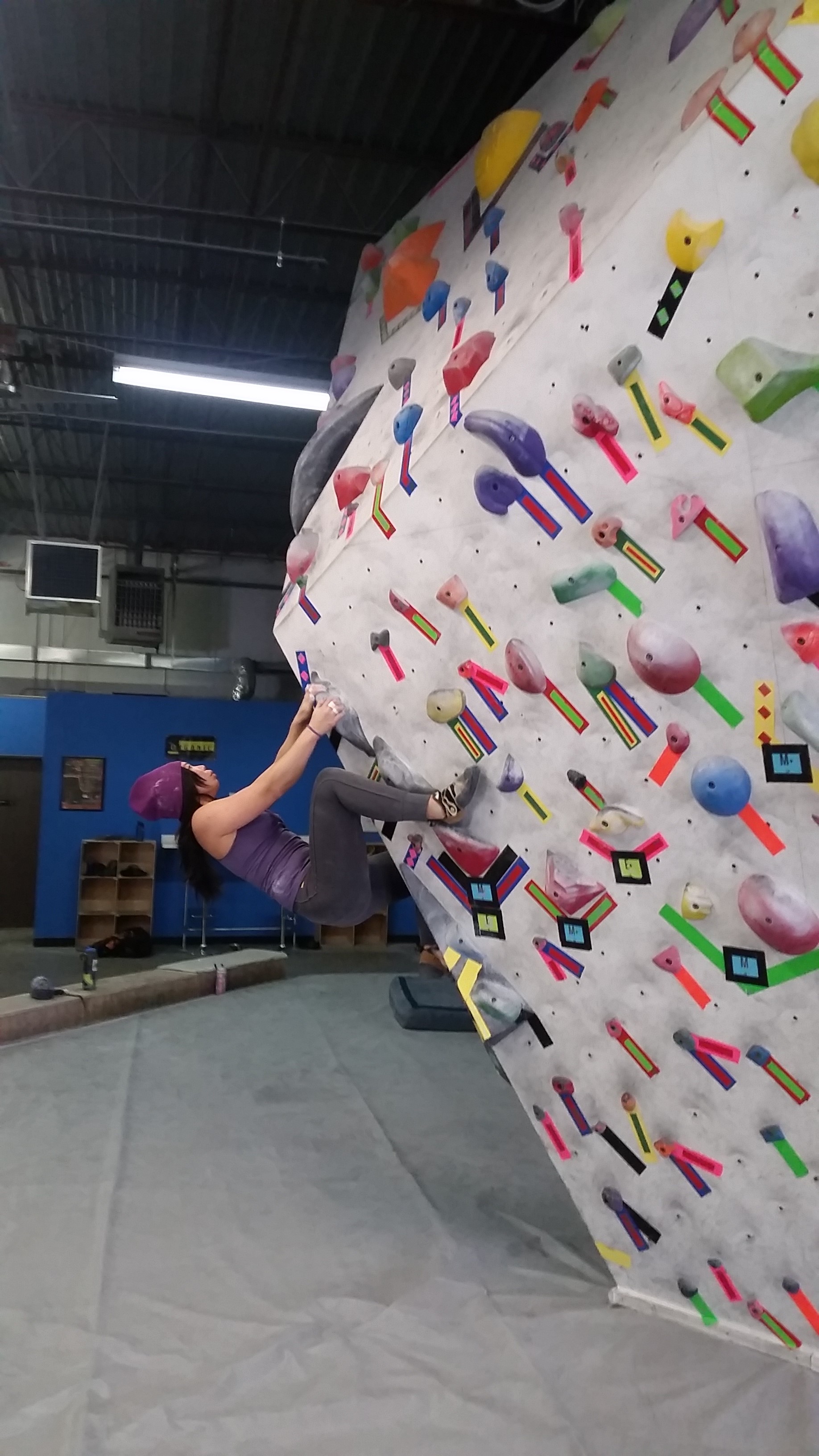
Powering through an overhang  @ Denver Bouldering Club this past weekend

Powering through an overhang @ Denver Bouldering Club this past weekend

Continue reading

It’s Not All About the Arms: Footwork 101

Most women I encounter are put off by rock climbing because they believe they don’t have the upper body strength to climb. This week’s edition of BB sets the record straight: ladies, it’s not all about the arms when it comes to climbing.

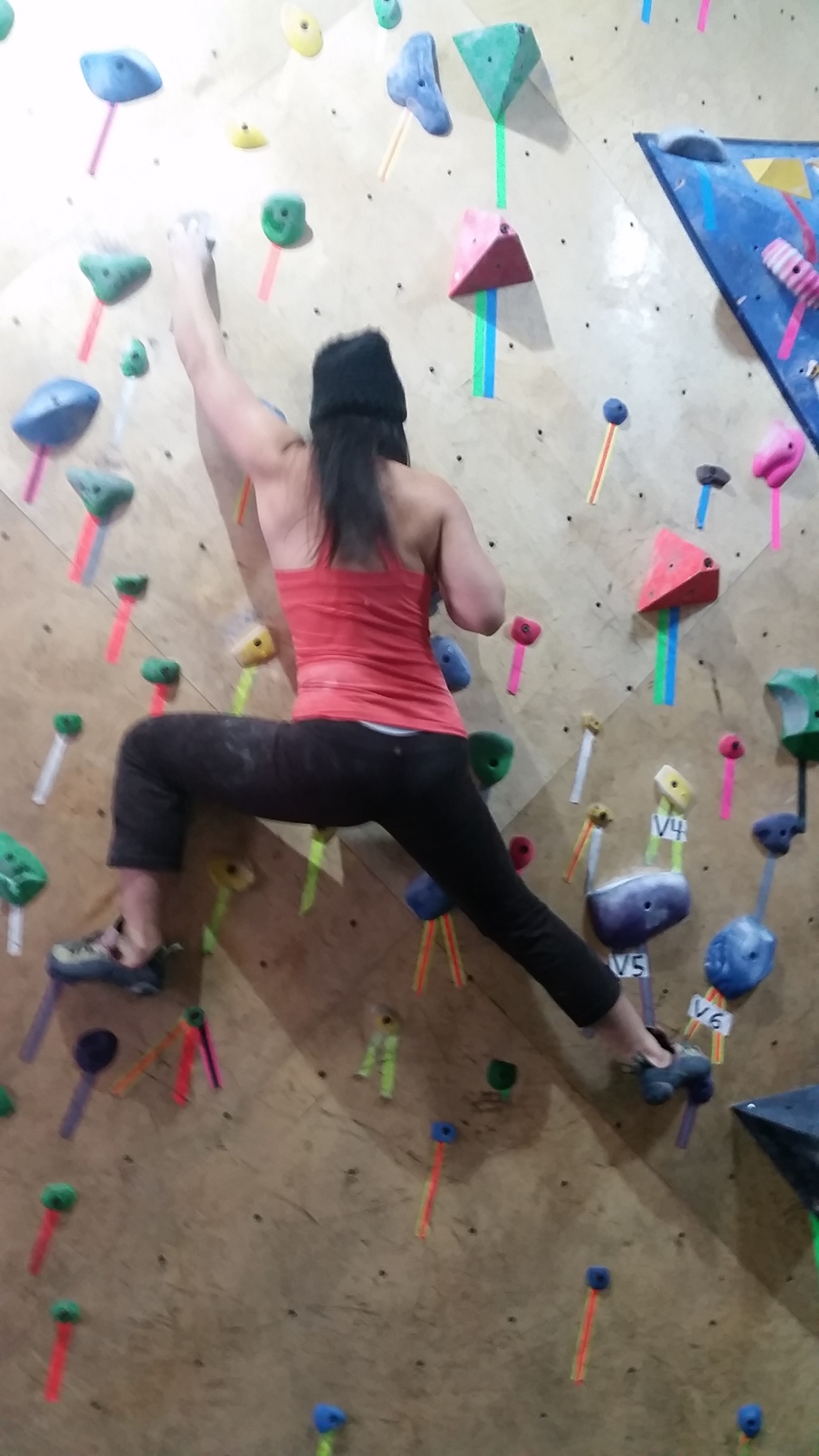
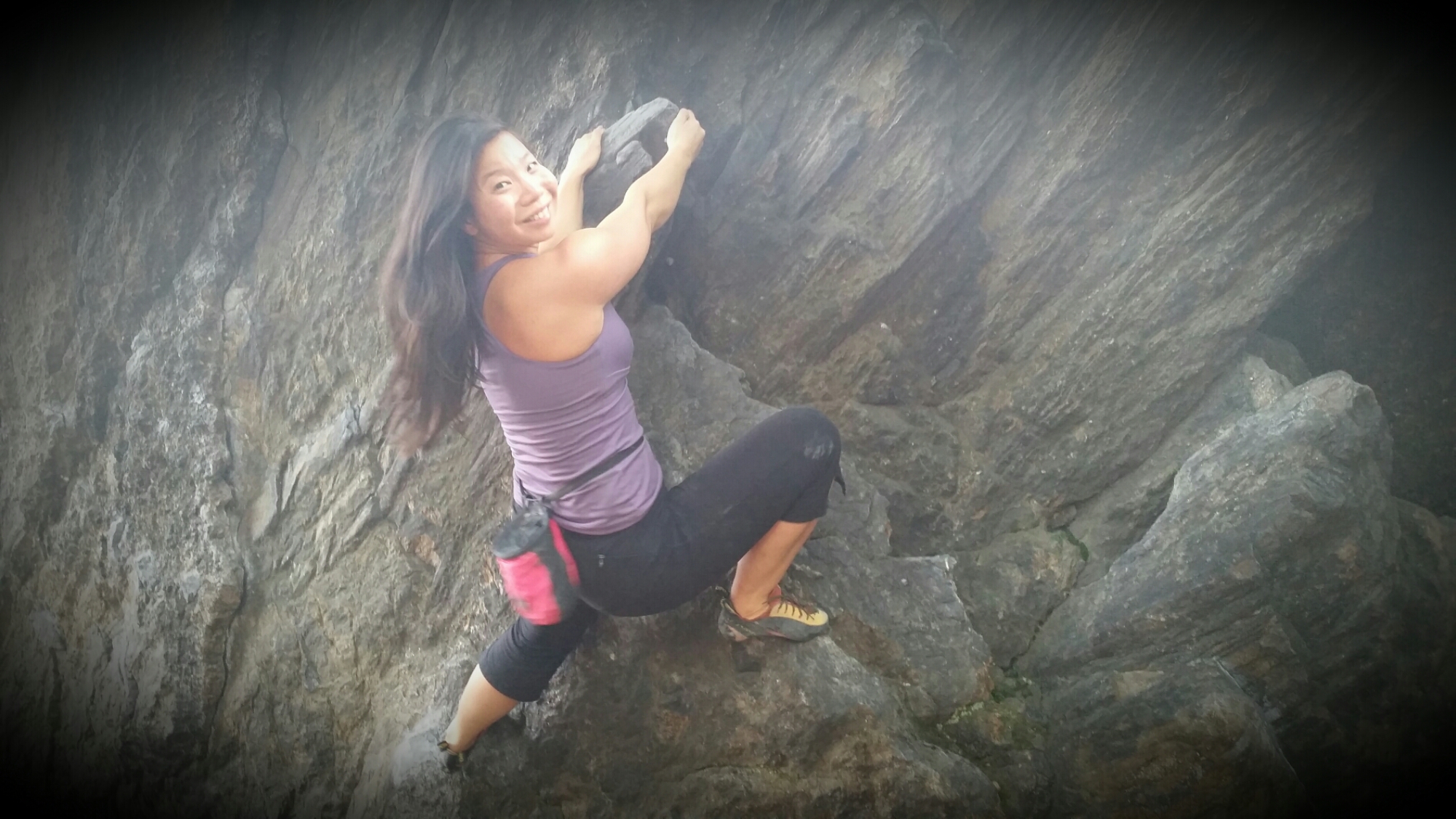
Jeanne workin' it on the wall

Jeanne workin’ it on the wall

Climbing is both strength and technique dependent. It’s true that if you do not have a minimum level of strength already, or you are not maintaining the strength that you do have, it may be important to do strengthening exercises. But (with a capital ‘B’), although upper-body strength and endurance are important for climbing, overall body tension, balance, flexibility, footwork, and core strength matter, too. Your core muscles — primarily your abdominals and erector spinae — are the glue that holds your body together, transferring force from your upper body to your lower body as you transition through various body positions on the climbing wall.

Now let’s get back this ‘arm strength only’ myth that we’re about to bust. Fact: your legs are far stronger than your arms. Climbing with your legs more than your arms will save you lots of energy and prevent your arms from getting pumped (that hardening, pulsing feeling in your forearms).

Continue reading

Learn to Climb Like a Pro

This week’s edition of BB features some bouldering beta from pro climber Kevin Liu.  Kevin is General Manager of Steep Rock Bouldering, and a sponsored evolv climber.

image

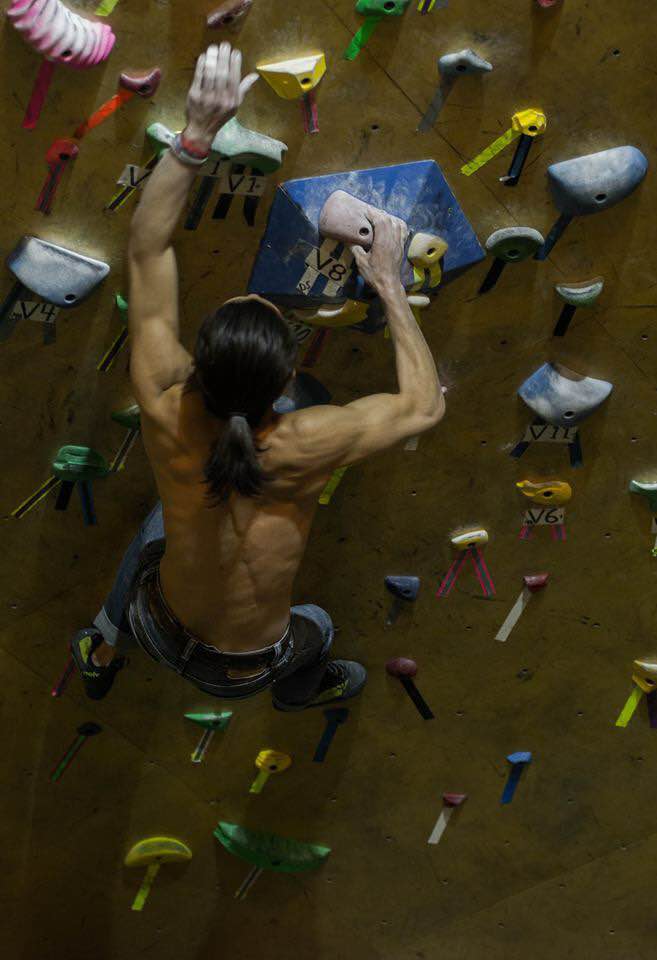
Kevin Liu crushing v8 @ Steep Rock Bouldering

Whether you’re an advanced or beginner boulderer, these five tips will keep you bouldering safe and strong:

-Stretching and warming up properly are key to preventing injury. When stretching the fingers,  make sure to pull down on the palms of your hands so that you’re stretching the forearm tendons, rather than pulling on the actual fingers,  which may cause them to hyperextend.

-Warm up slowly on easy climbs (v0’s) with your hips wide open, instead of using advanced techniques (e.g. knee dropping, twisting, high stepping,  etc.) This will help to open up your hip joints and muscles.

Continue reading

How to Cross Train to Enjoy Bouldering Stronger, Better, Faster, Longer (and Stay Injury-Free!)

One of my new students asked me the other day, ‘what should I be doing to cross train for climbing?’

Great question!  While the best training for climbing is climbing itself (ideally 2-3x a week, with rest days in between), there’s certainly strength to be had in cross training.

Steph Davis, one of the top female climbers in the world, sums it up super nicely in her blog post, Training When Not Climbing: core strength and turnout flexibility.  Turnout flexibility is increasing your turn-out in your hips, so you can climb with your pelvis sucked up against the rock or wall so you have less weight on your feet and have to pull more with your arms.

bb34

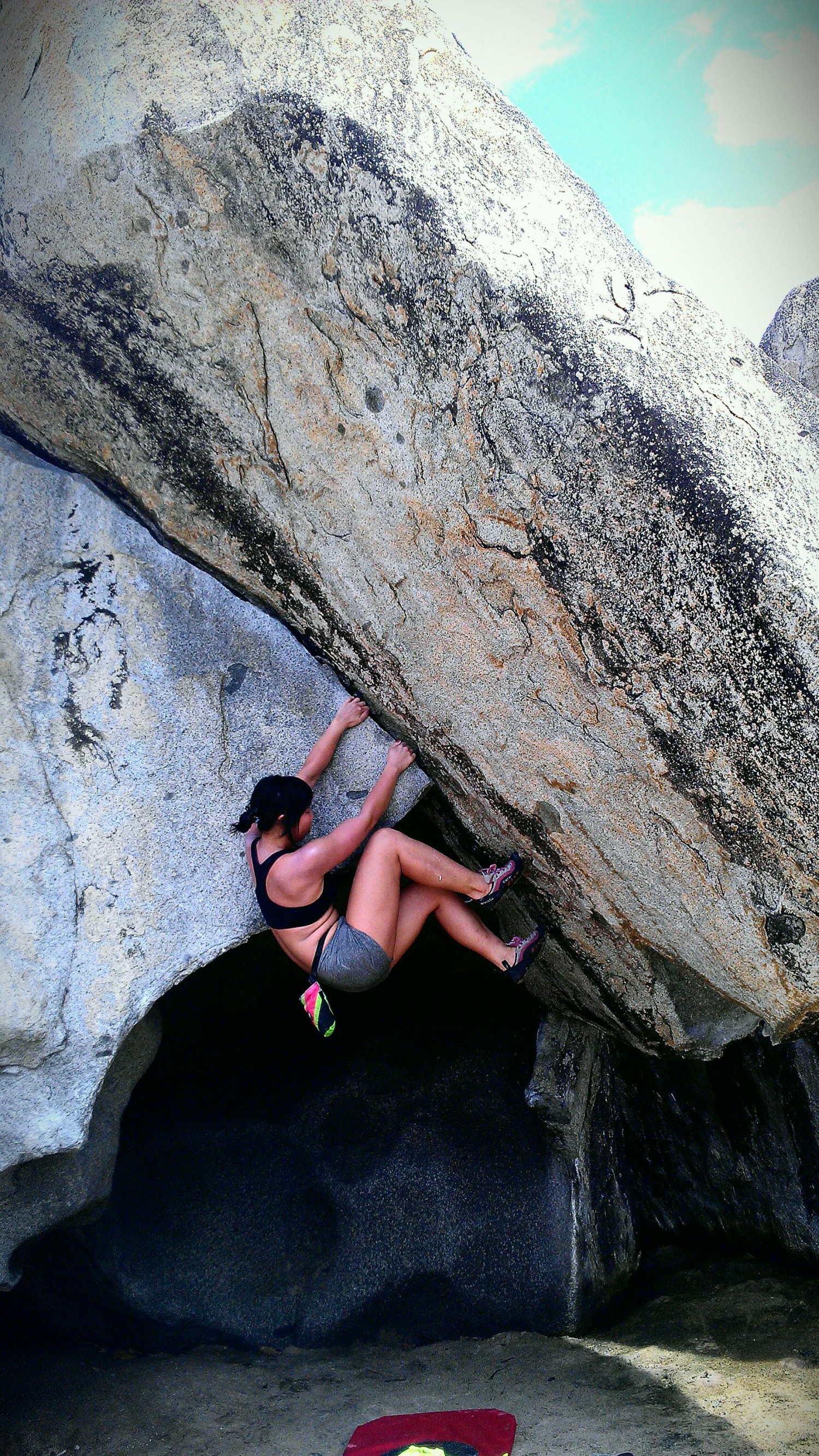
Working on my turnout flexibility on Babar, v4

Continue reading

New to Climbing? Learn to Fall…

..in love with climbing!  See what I did there?

So you’ve just taken your first climbing class, your first fall, or finished your first v3 – whichever way you spin it, you’re a newbie looking to advance to the next level.
bb15

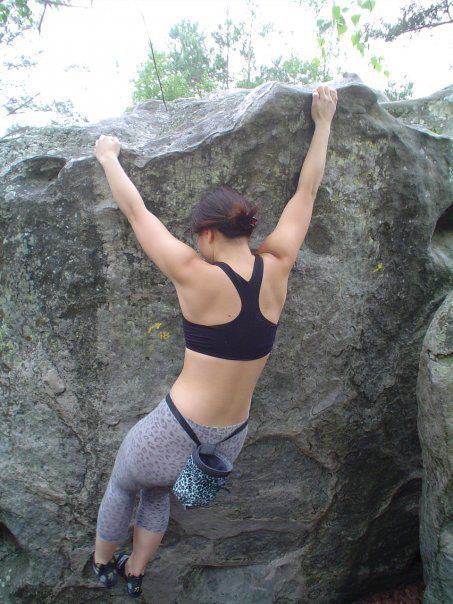
Bouldering in Fontainbleau, France, May 2007

Here are some bouldering best practices to keep in mind as you take your next steps on the wall:

Map Out Your Goals: As with any new endeavor, ask yourself what you’re looking to get out of climbing first and foremost. This will help you maximize your climbing sessions and keep you focused on the techniques needed to achieve your long-term objectives – whether they’re fitness-oriented, fear-conquering, fun-focused, or all of the above!

Design a Training Plan: Practice makes perfect, and bouldering is no exception.  Now that you have a few sessions under your belt and a few techniques up your sleeve, you’re ready to crush that pesky project you’ve been working on in your class, or the new shiny v2+ problem you’ve been eyeing that just went up this week.  Try to get to the gym at least two to three times a week to maximize your training time, and take at least one rest day between sessions at the outset.

-Be Kind to Yourself: Rome wasn’t built in a day, so instead of expecting to climb v10’s overnight, empower and encourage yourself through the learning process.  You will most certainly fall, and you will pick yourself up just as quickly, so try not to feel frustrated if you can’t get a certain move right, or you find yourself hitting a plateau.  You’ll be surprised how much memory your muscles retain, so even working through a difficult problem will program them to learn new techniques

-Breathe: Oftentimes, when we find ourselves in difficult situations, we forget to take a step back and take a deep breath.  This is particularly important to remember when working through the toughest moves, including the ones that are just as mental (e.g. fear-driven or commitment-phobic) as they are physical

-Stretch, Hydrate, Rest, Repeat: One of the rookie mistakes I’ve definitely made in my climbing career was to neglect all of the above before and after climbing.  That’s why I start all my classes and private lessons with a five-minute stretching session to warm up our shoulder, finger, and hip joints, and end our classes doing much of the same.  You’ll often see me downing tons of water during our sessions too, as that helps with alleviating the lactic-acid buildup (aka forearm pump) we feel after pulling our own body weight on the walls

-Invest in a Good Pair of Climbing Shoes:  You may notice after a few sessions that you’ve outgrown the rental shoe options and have a hankering for your very own pair.  A customized and comfortable shoe fit for your level (whether you’re a beginner or an expert) will help you take your climb to the next level.  There’s a handful of online resources on how to purchase the perfect pair of climbing shoes, but I like this simple guide best.

-Make it Social: One of the awesome benefits of joining a local climbing gym is the sense of community you create with others who are just as passionate as you are about the sport.  Aside from mingling with like-minded members, you’ll also have a spotter who encourages you on and off the walls

-Have a Blast: The most important best practice of them all.  ‘Nuff said.